Insights
The offer-holder question calendar: what students ask, month by month

Every university knows offer holders have questions. The harder part is knowing which questions come when.
To find out, we looked at everything students posted in the group spaces of 34 Uni-Life communities between March and October 2026: almost 11,000 posts and replies from students starting in the autumn intake. We sorted them into eight topics and tracked how the mix changed from one month to the next. No private messages, no names, no individual universities. Just the patterns.
The result is a calendar of the pre-arrival journey. Here's how it unfolds.
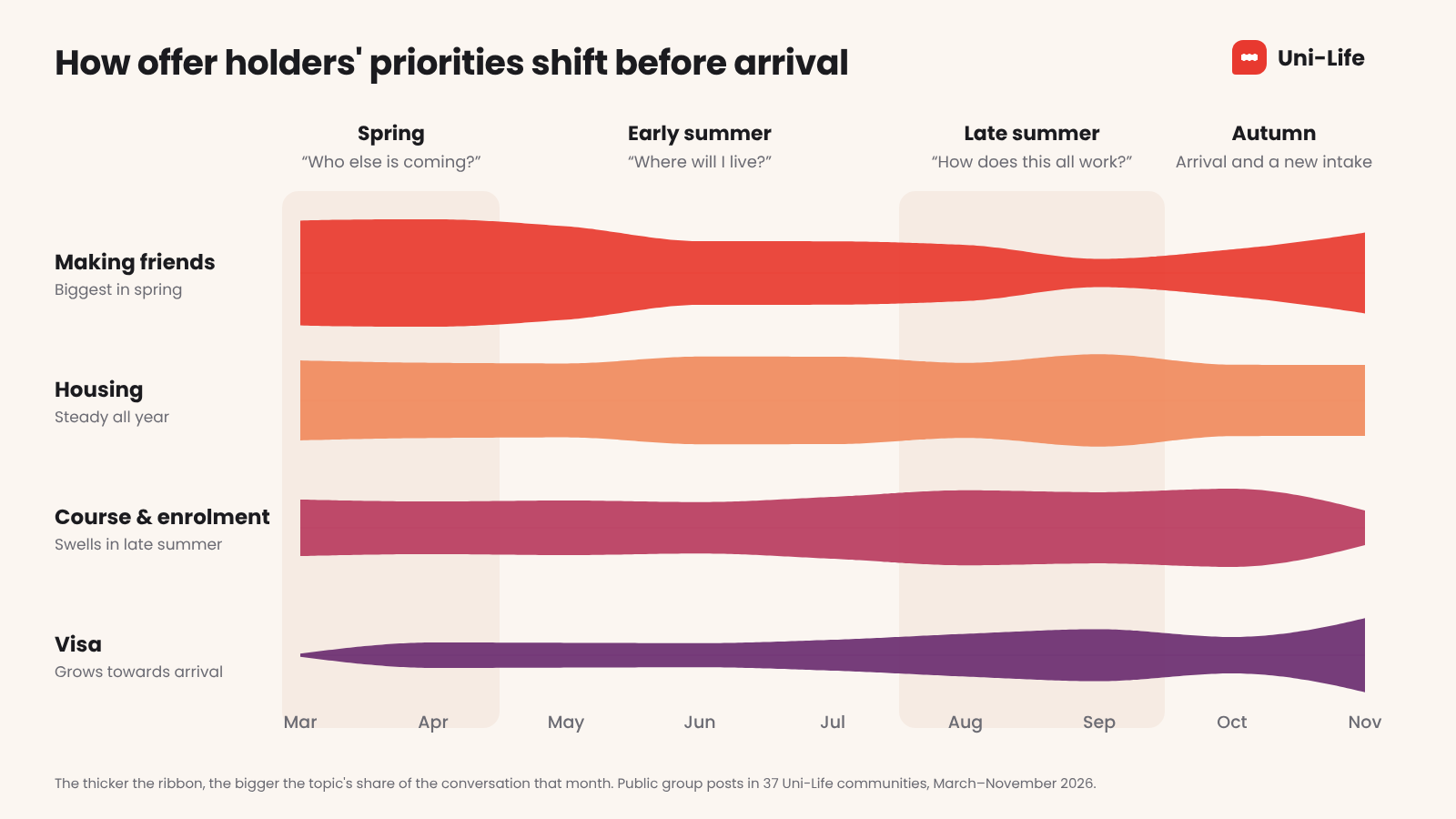
In March, April and May, the first questions aren't about visas, rooms or tuition. They're about people. Before students figure out how to get to university, they want to know who they'll be going there with. Making friends is the biggest topic in all three months, ahead of every practical concern, as students introduce themselves, look for classmates and ask who else is coming from their country.
For universities, this is the moment to help offer holders find each other. A first connection makes everything that follows, from paperwork to packing, feel more manageable.
By May, the first signs of change appear: questions about offers and decisions double, as students accept their places and make their final choices.
In June, housing overtakes making friends as the biggest topic, and it stays there through July. Offers and decisions peak in June, and money and fees rise too: tuition payments, deposits and what life will cost. The conversation also doubles in size, from about 1,000 posts and replies in May to almost 2,000 in June.
July adds one new question: how to get there. Travel questions double, as students start booking flights and planning their arrival.
The questions have moved from who to how. That makes spring the right time to share clear housing information: before the questions peak, not after.
August is the busiest month of the year, with almost 3,000 posts and replies. This is where the admin arrives, and where university staff can make the biggest difference with targeted support. For the first time, questions about courses and enrolment are as common as questions about housing: how to register for classes, where to find the timetable, what an unfamiliar term in the schedule means. Visa questions keep growing too.
In September, students arrive, and posting drops by more than half. Making friends falls to its lowest point of the year: by then, most students have found their people. Those still posting have practical questions, and visa questions reach their peak, often from students still waiting for appointments or decisions. These are the students who benefit most from a personal check-in.
In October, the questions turn to everyday student life. Courses and enrolment become the biggest topic, and money and fees reach their highest share of the year, as payments, budgets and costs become real. Support doesn't end when students arrive.
The months between offer and arrival aren't one long wait. They're a sequence of questions, and they arrive in a predictable order. Universities that know the calendar can stop reacting to questions and start anticipating them, with the right answers ready before students have to ask.
Want this for your own offer holders? We set up a fully managed offer-holder community in 2–4 weeks. Get in touch with the Uni-Life team.