Case Studies
The useful community: solving student problems at Tilburg University
Between receiving an offer and arriving on campus, students have plenty of questions. Some are practical: Where will I live? How does the visa process work? Can I find a part-time job? Others are more personal: Will I fit in? What's student life actually like?
For universities, answering these questions is an important part of supporting students through the transition. But not every problem has a straightforward solution, and not every question is one students feel comfortable asking university staff.
At Tilburg University, the approach has been to bring reliable information, university staff and students together in one community, making it easier to find answers and support from people who understand the experience.
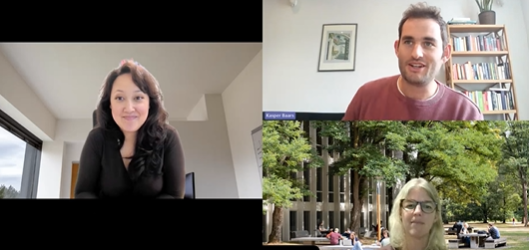
During a video interview Anneke Loeffen, Inbound Marketing & Recruitment Coordinator, and Nafthalie Jansz, Housing Coordinator at Tilburg University, shared what this looks like in practice.
Universities often think about the period between offer and enrolment in terms of conversion. Students experience it differently.
They're trying to picture their future lives, weighing their academic choices alongside everything that comes with moving somewhere new.
As Anneke explained, the academic and practical sides of that decision are inseparable. A student can love a university and still hesitate because they cannot see how the move will work.
It's one reason Tilburg launched its Uni-Life community in April: to help prospective students connect, ask questions and build confidence before arrival.
Housing is one of the clearest examples of how a student community can go beyond providing support and actually help students solve problems.
Tilburg doesn't own student accommodation. It works with housing partners, but available rooms are limited, leaving many students dependent on the private rental market.
Nafthalie's team already shares guidance through emails and the university website. Through the Uni-Life community, students can also ask questions directly, access reliable information and connect with others facing similar challenges.
As Nafthalie put it:
"When you help them with the correct links, the correct housing websites, and really guide them, then you see that they are more at ease."
But what makes the community particularly useful is that students aren't just receiving information. They're actively using it to find solutions.
In Tilburg's housing group, students have posted available rooms, looked for roommates and helped each other find accommodation. In some cases, students successfully found housing through a room shared by another student in the community. Others have connected with future neighbours at Talent Square, exchanged furniture and warned each other about potential rental scams.
And this practical support extends beyond housing. Tilburg's student ambassadors answer questions about daily life, schedules and places to go, including things students might hesitate to ask university staff.
Anneke sees this as a shift in how prospective students seek information. They're increasingly looking for answers from people whose experiences resemble their own.
For universities, the opportunity isn't to replace official guidance with peer advice, but to bring both into the same environment. A community becomes genuinely useful when students can turn the information and connections they find there into practical action.
It doesn't create more rooms or remove every obstacle, but it gives students a way to navigate challenges and help each other along the way.
In approximately five months, Tilburg's community reached almost 2,400 active users, generating more than 36,000 connections and 80,000 messages.
In a survey of participating students, 20% said the community played a big role in their final enrolment decision, while 13% reported they would have been less likely to enrol without it.
These are self-reported experiences, not evidence of a measured increase in enrolment. They do, however, suggest that students value having somewhere to connect during this uncertain period.
And the everyday conversations show another side of that value: students finding useful information, making connections and helping each other solve practical problems before they even arrive.
Student communities are often associated with making friends and building a sense of belonging. And while those things matter, Tilburg's experience highlights something equally important: a community can be a practical support system.
Not every problem can be solved by a university, but students can still be given the information, connections and reassurance they need to navigate it.
Anneke described the goal simply: helping students begin university a little less nervous, more confident and better prepared.
For admissions and student support teams, that's an important reminder. A successful pre-arrival community isn't just somewhere students meet. It's somewhere they can find the support they need to take the next step.


